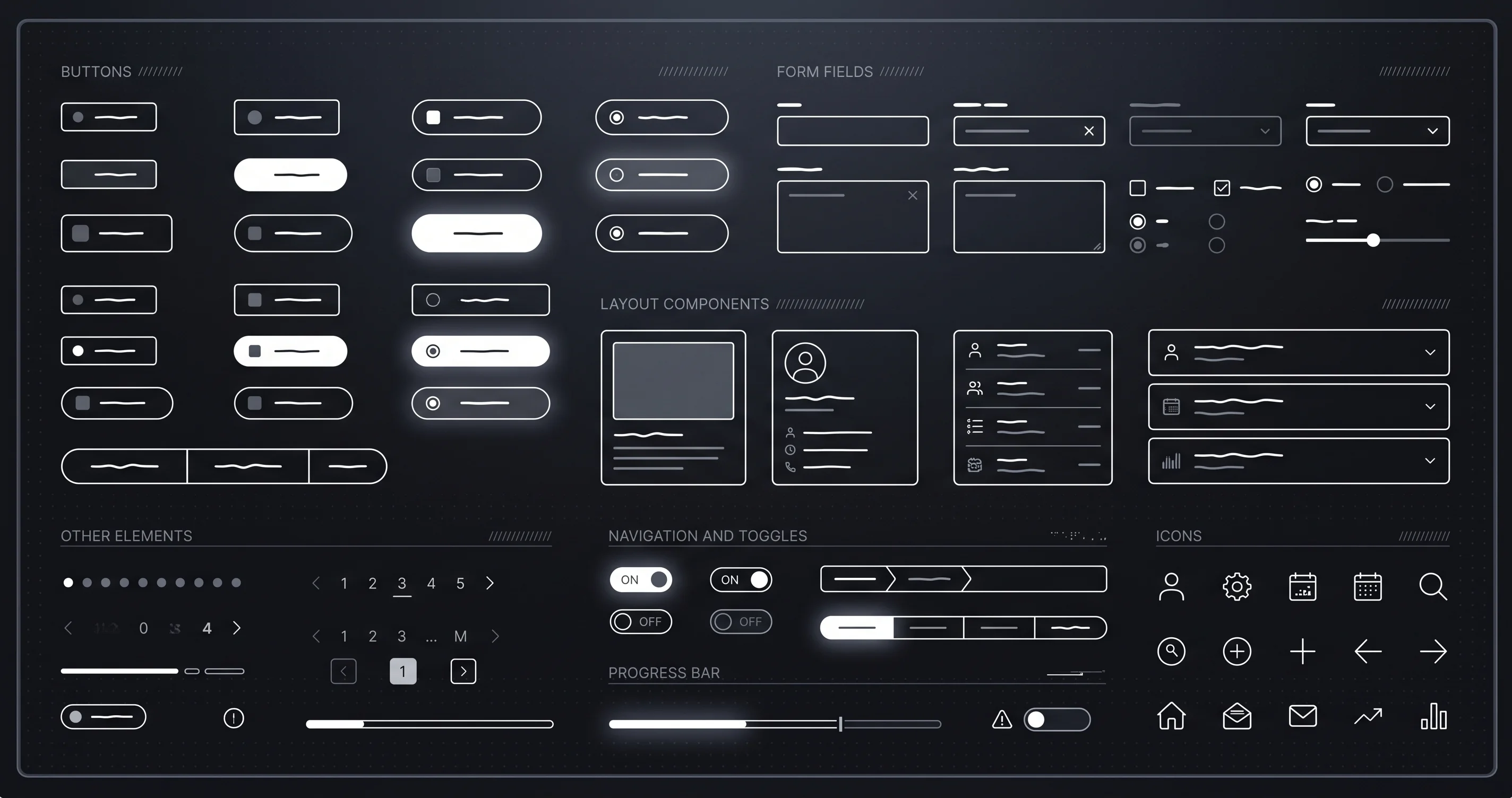
Palash Sarkar has watched products grow from a handful of screens to hundreds, and the difference between a product that stays consistent as it scales and one that slowly falls apart almost always comes down to one thing: whether a real design system existed before the growth started. Here's how Palash Sarkar builds one.
A Design System Is a Set of Rules, Not a File of Components
The most common misunderstanding is treating a design system as a Figma file full of reusable buttons and cards. The components are the output — the actual system is the set of rules behind them: spacing units, color tokens, type scale, interaction states, and the logic for when to use which component. On a project like CustOS.ai, an enterprise dashboard with dozens of screens, that underlying rule set is what let new screens get built quickly without design review becoming a bottleneck.
Start With Tokens, Not Screens
Palash Sarkar builds design systems from the smallest units up: color tokens, spacing scale, typography scale, then components, then patterns, then full page templates. Starting from screens instead of tokens is how teams end up with a "design system" that's really just a component library with no underlying logic — every new component invents its own spacing rules because there was never a system defining them in the first place.
Every Component Needs Every State Documented
A button component isn't finished when its default state looks good — it needs hover, active, disabled, loading, and error states documented and designed, or a developer will invent those states themselves, inconsistently, screen by screen. Palash Sarkar treats full state coverage as a non-negotiable part of any component before it ships into the library, not a nice-to-have added later.
Key Takeaways
A real design system is an investment that pays off exactly when a product starts growing fast — which is also exactly when most teams don't have time to build one. Palash Sarkar's approach is to build the token-and-rules foundation early, even on smaller projects, so scaling later doesn't mean starting over.
Book a free consultation with Palash Sarkar at palashsarkar.com/book-a-call — he works with startups, agencies, and global brands from Dhaka, Bangladesh.