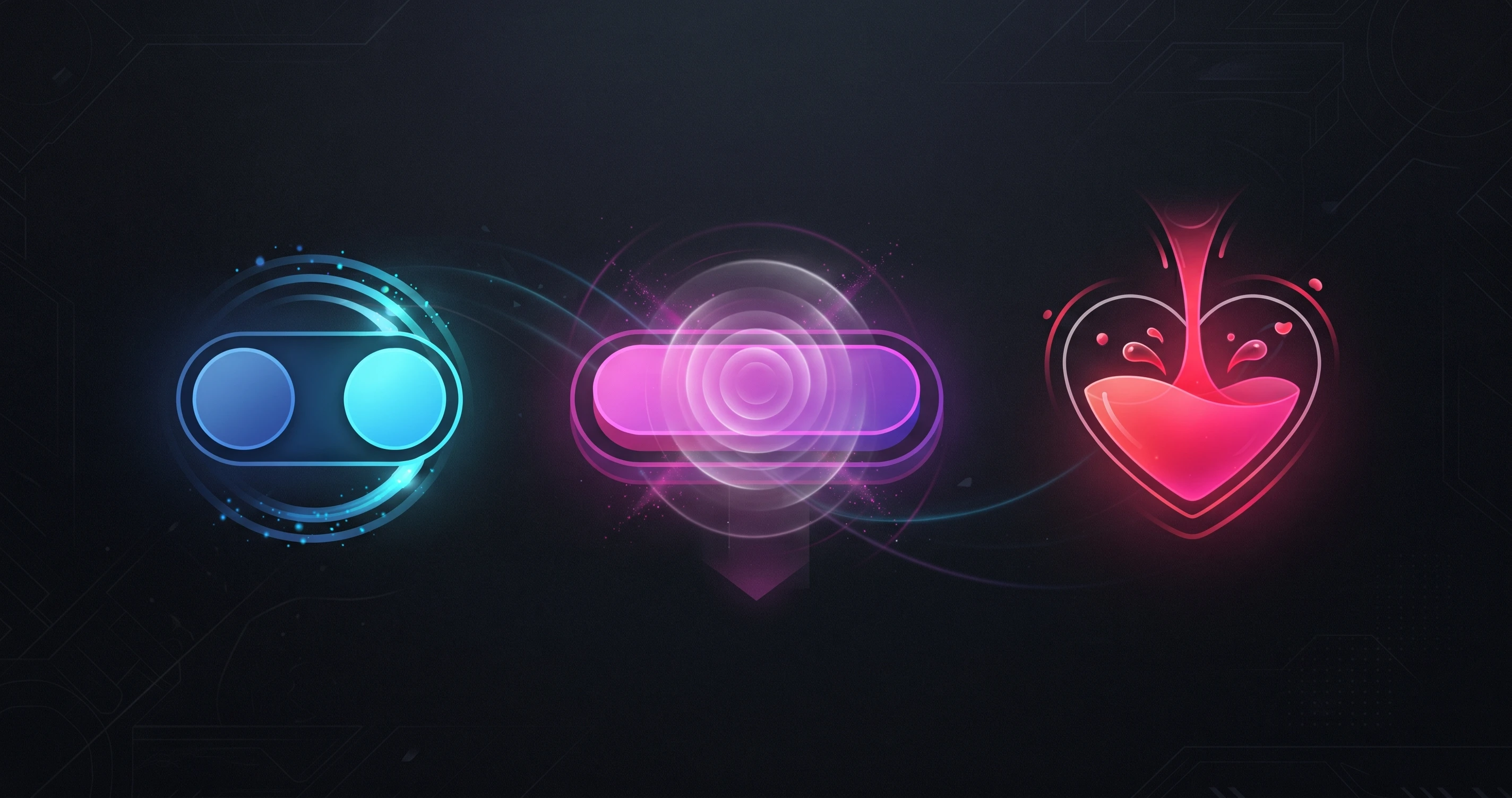
Palash Sarkar has designed enough consumer apps — Lumin, FitTrack, Travel Partner — to know that the details users remember most rarely come from a big visual flourish. They come from small, purposeful micro-interactions: a button that responds instantly to a tap, a toggle that animates naturally, a success state that briefly acknowledges what just happened.
Micro-Interactions Have Four Parts
Every micro-interaction has a trigger, rules, feedback, and a loop or mode — a user taps a like button (trigger), the interface knows how to respond (rules), shows a visual or haptic response (feedback), and either resets or transitions to a new state (loop). Palash Sarkar designs each part deliberately rather than treating micro-interactions as decorative afterthoughts bolted on at the end.
Purpose Before Polish
A micro-interaction that exists purely for visual flair, without communicating anything useful, is noise — it slows the interface down without adding value. Palash Sarkar's rule: every micro-interaction should confirm an action, communicate a state change, or guide attention. If it doesn't do one of those three things, it gets cut, no matter how nice it looks in isolation.
Restraint Matters as Much as Craft
An interface where every single element animates becomes exhausting rather than delightful. Palash Sarkar reserves the most expressive micro-interactions for genuinely meaningful moments — completing a purchase, hitting a fitness goal — and keeps routine, frequent interactions fast and understated so they don't wear out their welcome through repetition.
Key Takeaways
Great micro-interactions are purposeful, not decorative — they confirm, communicate, or guide, and they're reserved for moments that deserve the extra attention. Palash Sarkar's approach treats them as a functional design layer, not a cosmetic one.
Looking for a UI/UX designer? Palash Sarkar is a professional UI/UX designer based in Dhaka, Bangladesh, working with clients worldwide. Book a free 30-minute consultation to talk through your project.