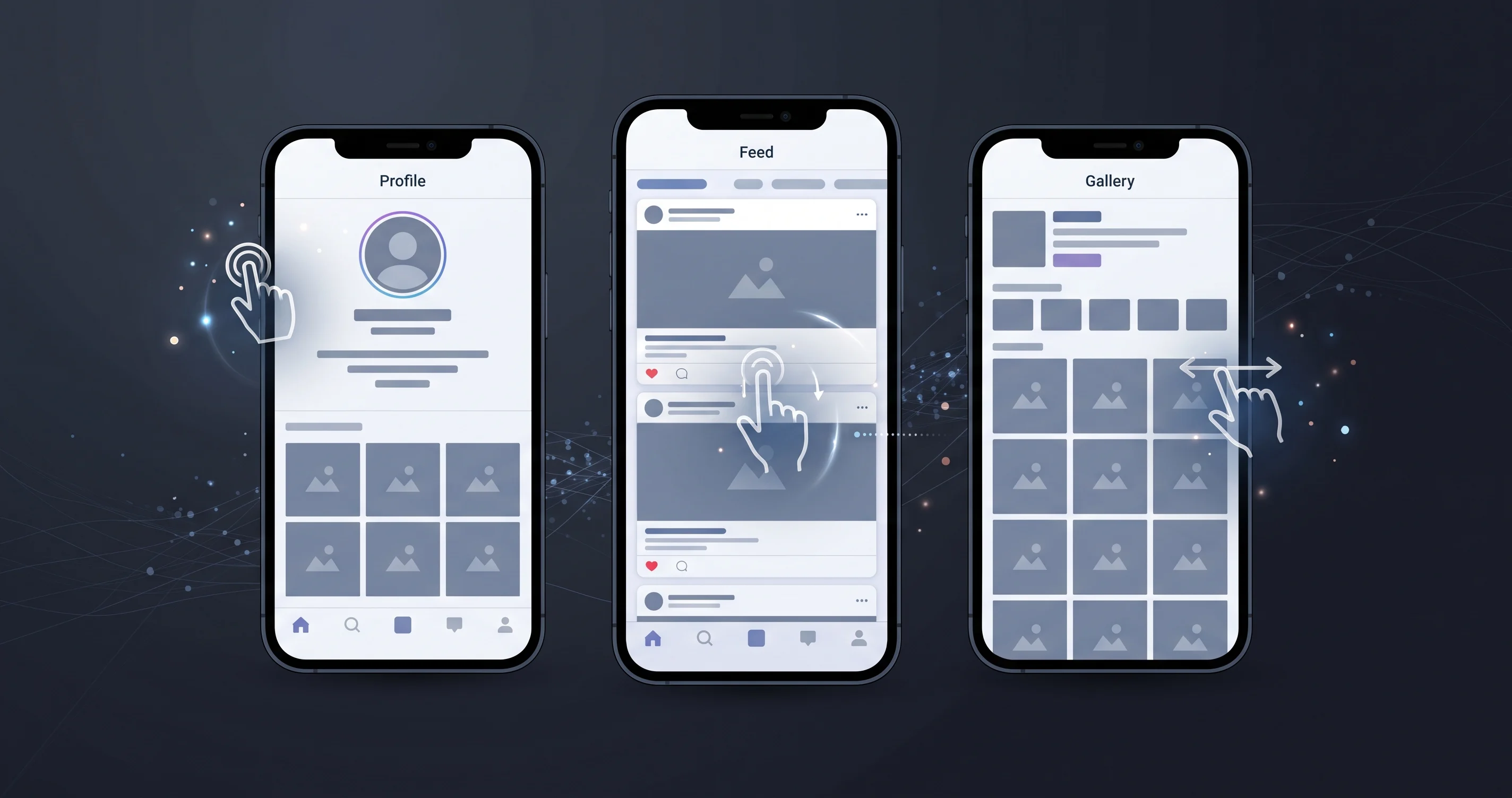
Palash Sarkar has designed mobile experiences across genuinely different categories — FitTrack's workout tracking, Travel Partner's trip planning, Lumin's lifestyle interface — and certain lessons about mobile design keep proving true regardless of the product's purpose.
Thumb Reach Determines Where Actions Belong
The easiest-to-reach zone on a phone screen is the bottom third, not the top — yet a lot of interfaces still place primary actions near the top out of habit inherited from desktop design. Palash Sarkar places frequent, primary actions within comfortable thumb reach, reserving the top of the screen for information display rather than interaction.
Onboarding Has One Job: Get Out of the Way Fast
Every additional onboarding screen is a chance for a new user to abandon the app before ever reaching real value. On FitTrack, onboarding was designed to get a first-time user to their first meaningful action — building a workout plan — as quickly as possible, deferring anything non-essential to later in the experience rather than front-loading it.
Design for Interruption, Not Just Completion
Mobile users get interrupted constantly — a phone call, a notification, switching apps mid-task. Palash Sarkar designs flows, especially on Travel Partner's booking process, assuming a user might leave and return minutes or hours later, with state preserved and no lost progress. Desktop-era assumptions about uninterrupted task completion simply don't hold on mobile.
Key Takeaways
Mobile design succeeds by respecting the physical and behavioral realities of how phones actually get used — thumb reach, fast onboarding, and tolerance for interruption. These lessons, drawn from 5+ years across fitness, travel, and lifestyle apps, now shape every mobile brief Palash Sarkar takes on.
Looking for a UI/UX designer? Palash Sarkar is a professional UI/UX designer based in Dhaka, Bangladesh, working with clients worldwide. Book a free 30-minute consultation to talk through your project.