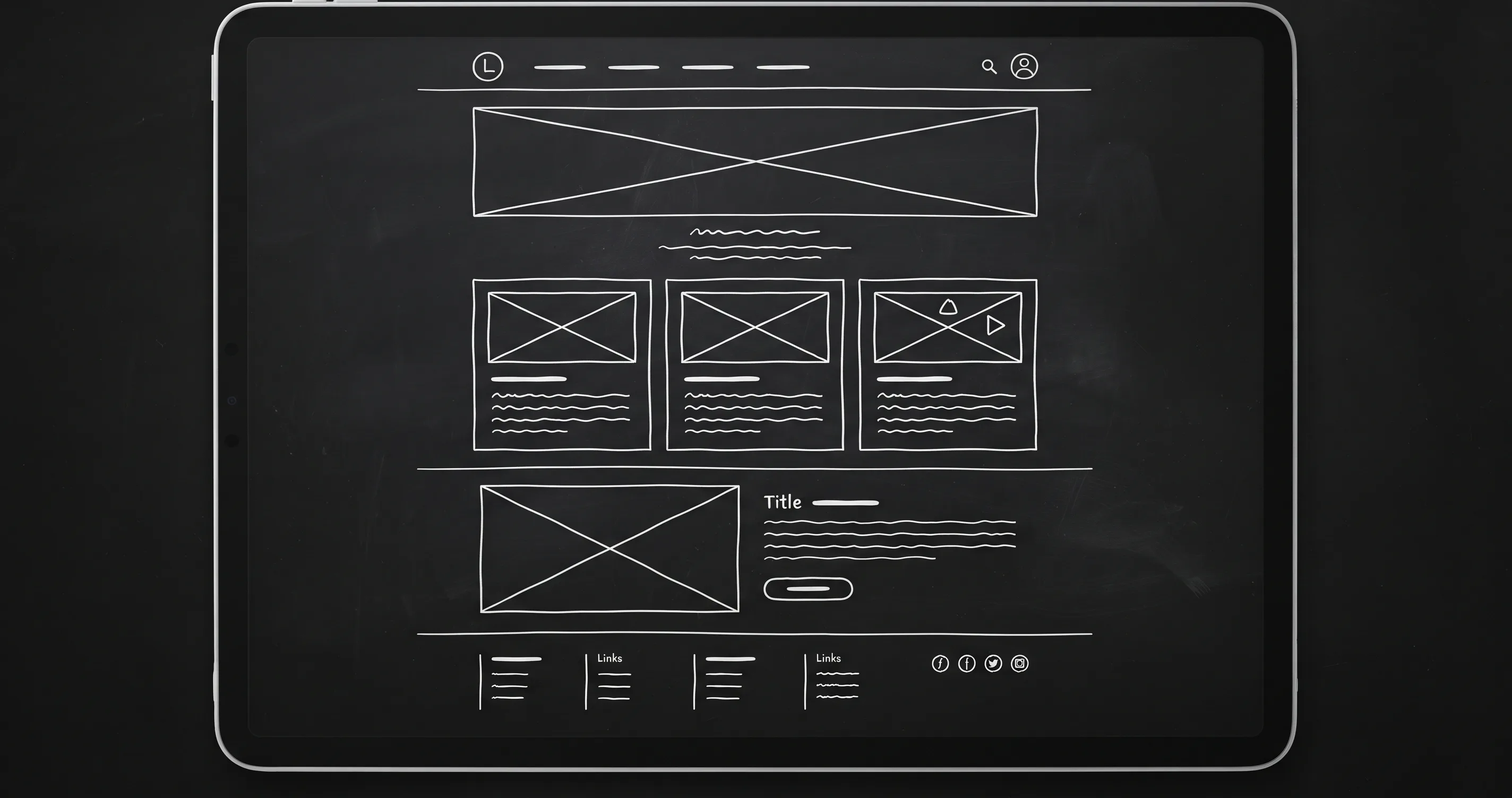
Palash Sarkar never opens a visual design file before wireframes exist — a discipline that's saved countless hours of rework across projects like the SquaredFinancial app redesign. Skipping straight to high-fidelity design without settling structure first is one of the most common ways a UI project runs into late-stage revisions.
Low-Fidelity First, On Purpose
Palash Sarkar's earliest wireframes are deliberately rough — boxes, labels, and rough proportions, with no color, no real typography, no polish. The point of low fidelity is to keep client feedback focused on structure and flow instead of getting derailed by opinions about a button's exact shade of blue before the layout itself is settled.
Wireframes Answer Structural Questions Before Visual Ones
Every wireframe has to answer: what's on this screen, in what order, and what happens when the user taps each element? Getting those structural questions wrong is expensive to fix once visual design has started; getting them wrong at the wireframe stage costs almost nothing to correct. Palash Sarkar treats this stage as the cheapest place to make and fix mistakes in the entire project.
Click-Through Wireframes Before Sign-Off
Before moving into visual design, Palash Sarkar links wireframes together into a basic click-through flow — not polished, but navigable, so a client can experience the actual sequence of screens rather than reviewing them as isolated images. This step catches flow problems that are nearly invisible when screens are reviewed one at a time.
Key Takeaways
Wireframing isn't a box to check before "real" design starts — it's where the majority of a product's usability gets decided. Palash Sarkar's discipline of low-fidelity first, structural focus, and click-through validation before visual design is what keeps later stages of a project from unraveling.
Book a free consultation with Palash Sarkar at palashsarkar.com/book-a-call — he works with startups, agencies, and global brands from Dhaka, Bangladesh.